University of Georgia
Dr. Coffman
Emma Nodine
24 October 2024
I. RESEARCH QUESTION: What are the Most Effective Forms of Dental Care Treatment for Patients with Autism Spectrum Disorder or Down Syndrome?
II. ABSTRACT:
Proper dental care and hygiene are crucial for maintaining overall health and provide unique challenges for all individuals, especially those with special needs. Patients with Autism Spectrum Disorder (ASD) and Down Syndrome (DS), specifically, face distinctive challenges that complicate routine oral hygiene and treatments. This literature review explores dental treatments to address the unique needs of individuals with ASD or DS. ASD is a disorder characterized by communication difficulties and sensory processing issues, leading to a higher prevalence of dental problems. Similarly, individuals with DS experience developmental delays and various health complications that further complicate their oral hygiene practices. The review highlights the importance of specialized dental care strategies tailored to these populations, including behavioral management, sensory accommodations, and effective communication methods. Despite evidence supporting these approaches, many dental professionals remain unprepared to treat patients with special needs, contributing to inadequate care and increased risk of chronic oral health issues. By evaluating current research on effective interventions and identifying best practices, this review aims to fill gaps in the literature and provide a comprehensive overview of optimal dental care treatments for patients with ASD and DS.
III. TABLE OF CONTENTS
INTRODUCTION
METHODS
Inclusion and Exclusion Criteria
Figure 1: Article Selection Process
RESULTS
Communication and Coordination-Based Interventions
Anxiety-Addressed Non-Invasive Interventions
Implication and Training
Figure 2: Detailed Summary of Articles Reviewed Table
DISCUSSION
Limitations
Implications
Conclusion
REFERENCES
IV. INTRODUCTION
Autism Spectrum Disorder (ASD) is a developmental disorder that affects individuals’ communication, behavior, and social interaction due to the wide range of symptoms and severities (CDC, 2020). Approximately one in 36 children under the age of eight years old in the United States has been diagnosed with ASD (CDC, 2020). ASD encompasses a range of neurodevelopmental conditions that affect communication, behavior, and social interaction (CDC, 2020). While many individuals with autism may also face co-occurring health issues like anxiety or gastrointestinal problems, early intervention, including behavioral therapies and social skills training, can significantly enhance developmental outcomes (CDC, 2020). Despite these interventions, challenges with social interactions and stimuli sensory issues may continue to affect their quality of life (CDC, 2020).
Down syndrome (DS) is a genetic disorder caused by the presence of an extra copy of chromosome 21, leading to developmental and speech delays, characteristic physical features, varying degrees of intellectual disability, and other symptomatic health issues (CDC, 2023). Approximately one in every 640 live babies born in the United States is diagnosed with DS, with approximately 5,700 babies born with DS each year in the United States (CDC, 2023). Individuals with Down Syndrome often experience a range of health issues, including congenital heart defects and respiratory problems (CDC, 2023). These medical challenges can impact their lifestyle by necessitating regular health screenings, therapies, and a tailored approach to education and social integration to support their development and well-being (CDC, 2023).
Proper dental care and hygiene are essential factors in maintaining individuals’ overall health and well-being. Approaching proper dental care and routine management of adequate oral hygiene presents unique challenges and needs for all patients, especially when treating individuals with special needs. Specifically, individuals diagnosed with ASD and DS often require tailored dental care techniques and treatments to address their individual needs and enhance their oral health outcomes.
ASD is commonly linked with oral fixations, atypical oral sensory sensitivity, bruxism (clenching/grinding), and other sensory processing differences that can complicate their abilities to communicate the pain in their teeth and gums (Sarah Barkley, 2023). Additionally, ASD often impacts individuals’ hand coordination and motor control, inhibiting their ability to maintain healthy oral hygiene. These difficulties with oral hygiene maintenance often cause a high prevalence of dental caries, periodontal (gum) disease, and other oral health implications that can advance without proper treatment to impact overall health (Sefa S. Laurence, 2022).
Individuals with DS commonly face many challenges, such as hearing loss of up to 75%, obstructive sleep apnea, coordination difficulties, bruxism (clenching/grinding), and other developmental disorders (Jessica Debord, 2024). These symptoms of DS impact oral hygiene abilities and can often increase risks of gum disease, tooth decay, and cavities (Jessica Debord, 2024). Patients with DS face distinct dental challenges, including congenital anomalies, increased prevalence of periodontal disease, and higher rates of malocclusion, which require a nuanced approach to dental treatment (Loh, 2002 ). Additionally, 50-56% of patients with DS have conditional heart defects, which often require antibiotics before appointments to reduce risks of infection which also increases the risk of complications with sedation commonly used to ease patients during treatment (Gianmaria D’Addazio, 2021).
Individuals with both ASD and DS often experience sensory processing issues, communication difficulties, and behavioral challenges that can complicate standard dental practices and inhibit abilities to maintain proper routine oral hygiene (NCIOM, 2024). These factors require the use of specialized techniques and interventions to allow for effective dental care and hygiene that is most comfortable for the patient. In the United States, only 69.2% of all dentists are willing to treat persons with disabilities, and 49.1% of people with disabilities report rarely or never going to the dentist (Gianmaria D’Addazio, 2021). A lack of awareness and insufficient training in proper treatments and accommodative measures in treating patients with special needs prevents individuals with DS and ASD from receiving proper, comfortable, and effective oral care (Darlene Jones, 2023). This can lead to a long-term increase in chronic oral health problems such as severe periodontal (gum) disease, tooth loss, and bone decay, negatively impacting individuals’ overall health and causing otherwise preventable pain and discomfort (Sefa S. Laurence, 2022). Poor oral hygiene and dental implications can lead to systemic conditions, such as heart disease, diabetes, and respiratory infections, as bacteria from the mouth can enter the bloodstream and affect other parts of the body (ADA, 2024). In instances of extreme poor oral health, cases such as untreated periodontal disease can allow bacteria to enter the bloodstream, contributing to serious issues such as heart disease, stroke, or infections in other organs. Additionally, severe oral infections, such as abscesses, can become systemic and lead to sepsis, a life-threatening response to infection (ADA, 2024).
Current research highlights the need for and efficacy of specialized dental care strategies and treatments for patients with ASD and DS due to their unique medical conditions and needs. Specialized techniques utilizing sensory accommodations have been employed to address some of these needs effectively (Mecca Slocum, 2024). Despite these efforts, there remains a lack of a cumulative review of the most effective methods and treatments, and a significant portion of dental professionals remain inadequately prepared to treat patients with special needs. This literature review will examine the current evidence base regarding effective dental care strategies for patients with ASD and DS. By evaluating studies on behavioral interventions, preventive practices, and treatment adaptations, the review aims to identify best practices and highlight gaps in the existing research on current treatments. The purpose of this literature is to analyze the most effective dental care treatments for patients with Down Syndrome and Autism Spectrum Disorder.
V. METHODS
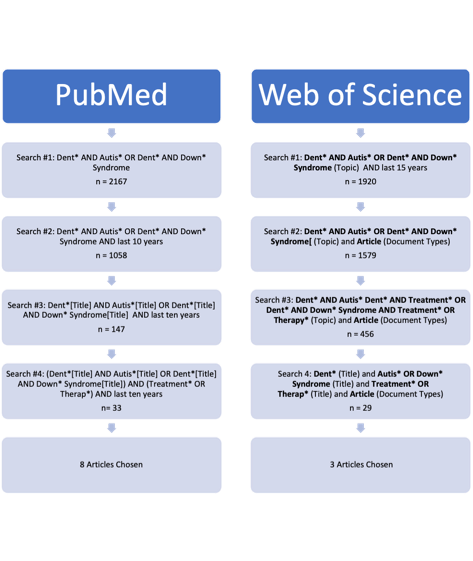
For this literature review, the two primary databases that were utilized to gather articles were PubMed and Web of Science. PubMed, the first database used, is a comprehensive online health database that focuses on medical sciences and healthcare information. PubMed exclusively features peer-reviewed sources, ensuring that the journal articles retrieved are reliable and trustworthy. This makes PubMed a valuable resource for researchers seeking credible medical literature. The second database, Web of Science, provides access to a broad array of disciplines, including healthcare. Similar to PubMed, Web of Science offers only peer-reviewed sources, enhancing the reliability of the articles found. This criterion makes the Web of Science a significant tool for conducting thorough, reliable research across various scientific fields. The process of narrowing the results of the databases down to the final selected articles used in this literature review is detailed in Figure 1.
The search process in the PubMed database began with the terms “Dent* AND Autis* OR Dent* AND Down Syndrome,” which initially yielded 2,167 results. To refine the search, the criteria were adjusted to include only articles published between 2014-2024, resulting in 1058 relevant outcomes. Further narrowing the search by requiring the articles’ titles to include the key terms yielded 147 results. Restricting results to also include “Treatment*” or “Therap*” yielded 33 articles. Eight of the eleven articles used in this literature review came from the PubMed database.
In the Web of Science database, the initial search also started with the terms “Dent* AND Autis* OR Dent* AND Down* Syndrome,” AND published between 2009-2024, yielding 1920 results. To refine the sources, the search was adjusted to specify that the document from “Dent* AND Autis* OR Dent* AND Down* Syndrome” must be an article, narrowing the search down to 1579. Further narrowing of the articles was achieved by restricting the results to publications also including “Treatment*” or “Therap*”, requiring the mention of treatments or therapies relating to the other criteria in the article, yielding 456 results. A final specification was made to include only those articles with key terms in the title, yielding 29 results. Three of the eleven articles used in this literature review came from the Web of Science database.
Inclusion and Exclusion Criteria
The term “Dent*” was included to encompass a range of topics related to dentistry, including dentistry, dental care, dental treatments, and dental hygiene. Similarly, “Autis*” was utilized to encompass “Autism”, “Autistic”, and “Autism Spectrum Disorder”. The term “Down* Syndrome” was included to capture variations of the syndrome, “Down Syndrome” and “Down’s Syndrome,” both of which are commonly used to refer to the same condition. The terms “Treatment*” and “Therap*” were added to require the mention of treatment, treatments, therapy, therapies, and therapeutic throughout the articles. Additionally, the search was restricted to peer-reviewed articles published within the last ten or fifteen years, for PubMed and Web of Science respectively. Further restrictions require the inclusion of the specified terms in the title. The inclusion criteria specified that each article included individuals with either Autism Spectrum Disorder or Down Syndrome and addressed treatments or therapies related to dental care or hygiene.
The exclusion criteria of this search eliminated any articles that were not peer-reviewed or that fell outside the ten-year or fifteen-year publication window for Pub Med or Web of Science, respectively. Articles that did not directly address the research topic in dental treatments or pertain to individuals with Autism Spectrum Disorder or Down Syndrome were also excluded. This careful selection process ensured that only the most relevant and credible sources were considered for the study, resulting in a final selection of ten sources.
Figure 1: Article Selection Process
VI. RESULTS
The management of dental care and hygiene for patients with ASD and DS presents unique challenges that are best managed by specialized interventions tailored to the patient’s specific needs. This study aims to address and provide a comprehensive overview of the most effective forms of dental care treatments for each disorder by exploring the treatments that have previously been tested. Treatments developed for the needs of special needs patients are often grouped into a large “special needs” category, inhibiting necessary tailored treatments that are most comfortable and effective for the patients. In this study, the different types of interventions are collectively addressed, including communication and coordination-addressed interventions, anxiety-addressed interventions, and training interventions.
Communication and Coordination-Based Interventions
Individuals with ASD and DS often face significant challenges in receiving dental care and maintaining healthy oral hygiene. These challenges primarily stem from difficulties in communication and coordination, which are common symptoms associated with both conditions. The use of communication boards has proven beneficial in improving interactions between caregivers and children with ASD, facilitating better understanding and cooperation during dental visits (Naidoo & Singh, 2020). This study indicates that visual aids can significantly enhance the dental care experience for patients with ASD by improving expressive and receptive language in an oral care environment (Naidoo & Singh, 2020). Studies have also found that integrating technology into dental practices for children with ASD, such as apps designed for communication and behavior management, can reduce anxiety and improve care delivery (Pagano et al., 2022).
These methods further optimize the communication between patients and their dental care professionals, increasing patient compliance and comfort, and ultimately making the dental treatment more effective overall (Pagano et al., 2022).
In addition to techniques to improve the quality of communication between dental care providers and patients with DS and ASD, interventions addressing the coordination difficulties associated with conditions also significantly improve the quality of oral care maintained by these individuals. Research indicates that customized handle toothbrushes markedly enhance plaque removal in children with DS compared to standard designs, underscoring the necessity of tailored dental hygiene products for better oral health outcomes (Fageeh et al., 2022). The use of these specialized tools allows for reduced bleeding and prevalence of plaque after brushing, improving patients’ comfort and compliance in the management of their oral hygiene (Fageeh et al., 2022). These brushes are also specially designed for limited dexterity, improving the ability of individuals with physical impairments to properly manage their oral hygiene (Droubi et al., 2021). Ultimately, implementing tailored interventions and specialized tools not only enhances oral hygiene practices but also fosters a more positive dental care experience for individuals with DS and ASD, leading to better overall health outcomes.
Anxiety-Addressed Non-Invasive Interventions
Effective management of anxiety has also been proven crucial for enhancing the dental experience of children with DS and Autism Spectrum ASD. Audiovisual distraction has been shown to significantly reduce anxiety during dental procedures, highlighting that this technique improves the overall dental experience for children with DS undergoing treatments (Bagattoni et al., 2020). By providing a simple, non-invasive means of managing anxiety, audiovisual tools improve the effectiveness of dental care for patients with DS by relieving anxiety and pain in healthy children during treatment (Bagattoni et al., 2020)
Further treatment adaptations also address a reduction in patient anxiety to optimize treatment effectiveness, including the use of service dogs in the dental office. Pilot studies on dog-assisted therapy reveal that the presence of therapy dogs can significantly alleviate anxiety levels during dental visits, thereby enriching the overall experience for these children (Naik et al., 2023a). This innovative approach facilitates effective behavior management that allows for a more positive interaction with dental care (Naik et al., 2023a). For patients who desire further intervention for anxiety during procedures than non-invasive methods, moderate sedation has also been tested for patients with Down Syndrome. This method of moderate sedation can be safely and effectively administered to patients with DS, improving successful compliance in dental treatment and outcomes (Ferrary et al., 2019). This intervention has proven to be highly effective in the management of patient anxiety during treatments (Ferrary et al., 2019). For individuals with both ASD and DS, effective adaptations to dental care include desensitization techniques and specialized training for dental professionals. Desensitization is the psychological process that reduces a person’s emotional response to a stimulus after repeated exposure (Martínez Pérez et al., 2023). These strategies are essential in preparing both populations for dental visits, as gradual exposure to dental settings has been shown to significantly reduce anxiety and improve compliance during procedures (Martínez Pérez et al., 2023). Implementing these strategies in both populations of patients leads to better cooperation during treatments, ultimately enhancing the effectiveness of dental care (Martínez Pérez et al., 2023). Employing both invasive and non-invasive anxiety-reduction techniques and specialized interventions is highly effective in creating a comfortable and effective dental environment for children with DS and ASD, ultimately improving their overall treatment experiences and outcomes.
Implication and Training
Tailored training programs and collaborative approaches are essential for improving dental care outcomes for individuals with ASD and Down syndrome DS. For individuals with ASD, the TEACCH-based training (Treatment and Education of Autistic and Communication Handicapped Children) approach significantly improved compliance during clinical dental assessments for both adults and children with ASD (Orellana et al., 2014). This structured, visual-based approach helps reduce anxiety and enhance cooperation during dental visits, making it a valuable tool in pediatric dentistry by clarifying the exact tools and their intentions to patients throughout treatment to alleviate dental anxiety. Additionally, simulated virtual training modules have been tested and found to improve dental hygiene students’ knowledge and confidence in caring for children with unique needs, including those with ASD (Cenzon et al., 2022). Such training programs equip future dental professionals with essential skills for effective communication and behavior management, fostering a comprehensive understanding of patient needs specific to their unique conditions. Furthermore, inter-professional collaboration between dental hygiene students and those from communication sciences and disorders has been found to enhance care outcomes, allowing for a better understanding of the complexities involved in treating children with ASD and DS (Anderson et al., 2017). In implementation in dental practices, this training should encompass not only technical skills related to dental procedures but also strategies for effective communication and behavior management. This collaborative approach promotes effective specialized care in clinical dental settings, ensuring that patients with both DS and ASD receive comprehensive and compassionate care tailored to their needs and enabling patients to implement routine healthy habits. Implementing both structured training and inter-professional collaboration in dental practices is vital for ensuring that children with ASD and DS receive the necessary quality care, significantly enhancing their dental experiences and overall health outcomes.
Figure 2: Detailed Summary of Articles Reviewed Table
| Authors | Public. Date | Article Title and Journal | Purpose | Sample Info | Type of Research | Research Findings | Limitations | |
| 1 | (Bagattoni et al., 2020) | 2020 | Effects of audiovisual distraction in children with Down syndrome during dental restorations: a randomized clinical trial European Journal of Pediatric Dentistry Web of Science | To evaluate the effect of audiovisual distraction on the dental chairside behavior of children with Down syndrome (DS) during dental restorations and its influence on the operator stress and the duration of the appointment. | 48 children with DS requiring dental restorations | Randomized controlled trial | In the study group 64% of the children refused to wear the video eyeglasses during the whole duration of the dental treatment, Audiovisual distraction using video eyeglasses is not useful in managing the dental chairside behavior of children with DS. | Small group was tested, large sample size recommended for testing |
| 2 | (Martínez Pérez et al., 2023) | 2023 | Importance of Desensitization for Autistic Children in Dental Practice Children Web of Science | Examine the influence of the latency time elapsing between desensitization and the real dental situation on facilitating the access of children with autism to dental treatment. | 19 patients with autism, age 3-14 years and attended the Special Education Center in Madrid but were living with their parents at home | Experimental Study | There is a statistical difference in the number of steps reached between the children who received the information just before the examination date and the children who experienced a longer latency period between receiving the information and experiencing the examination | Further studies with larger sample sizes and a control group are recommended. |
| 3 | (Fageeh et al., 2022) | 2022 | Dental Plaque Removal with Two Special Needs Toothbrushes in Patients with Down Syndrome: A Parallel-Group Randomized Clinical Trial of Efficacy Oral Health and Preventative Dentistry Web of Science | To compare the effectiveness of two varieties of special needs toothbrushes in terms of dental plaque removal and bacterial contamination vs a conventional toothbrush in patients with Down syndrome. | 16 patients diagnosed with Down syndrome (age 6-15 years) from various special needs centers located in the Jazan Province of Saudi Arabia | Single-blinded, two-group, randomized clinical trial | The use of special needs toothbrushes can statistically significantly improve the gingival health status in individuals with Down syndrome in terms of both resolution of periodontal inflammation and reduction of plaque accumulation. | Not all differences noted were statistically significant. |
| 4 | (Naik et al., 2023a) | 2023 | Evaluation of dental anxiety in children with Down’s syndrome using dog-assisted therapy: A pilot study. Journal of the Indian Society of Pedodontics and Preventive Dentistry PubMed | The aim of the study was to assess the impact of dog-assisted therapy (DAT) on children with Down’s syndrome undergoing dental examination and fluoride varnish application in dental operatory. | 20 children between 5-12 with Down’s Syndrome. | Experimental Study | DAT can be used as an effective behavior management technique for children with Down’s syndrome undergoing dental examination and simple dental procedures in the dental operatory. | Only 20 participants total so only 10 in each control/ experimental group |
| 5 | (Droubi et al., 2021) | 2021 | Does Customized Handle Toothbrush Influence Dental Plaque Removal in Children with Down Syndrome? A Randomized Controlled Trial Healthcare PubMed | The purpose of the study was to evaluate the effectiveness of customized handle toothbrushes in enhancing dental plaque removal in children with Down syndrome compared to typically developing children, addressing the unique oral hygiene challenges faced by children with disabilities. | aged 6–9 years old, the presence of at least 10 teeth free from dental caries on both buccal and lingual surfaces of the teeth, Down syndrome patients required diagnosed by a specialist medical operator and after obtaining parents’ consent | Parallel-arm, double-blind, randomized clinical trial | The study found that children using customized handle toothbrushes demonstrated significantly lower plaque accumulation and improved gingival health compared to those using conventional toothbrushes, with notable enhancements observed over time for both typically developing children and those with Down syndrome | Sample limitations included challenges in recruiting participants with DS, difficulties in maintaining blinding, and reliance on parents to ensure adherence to brushing instructions |
| 6 | (Orellana et al., 2014; Valdez-Zambrano & Romo-Cardoso, 2024) | 2024 | Training adults and children with an autism spectrum disorder to be compliant with a clinical dental assessment using a TEACCH-based approach Journal of Autism and Developmental Disorders PubMed | The purpose of the study is to assess the effectiveness of a TEACCH-based approach in improving compliance during dental assessments for individuals with ASD. | Adults and children diagnosed with autism spectrum disorder | Intervention study | The TEACCH-based training significantly improved the compliance rates of participants during dental assessments, suggesting that structured and visual approaches can enhance the experiences of individuals with ASD in clinical settings. This indicates the potential for tailored interventions to improve health care outcomes in this population. | Limitations included a small sample size and the specific characteristics of participants, which may restrict the generalizability of the findings to a broader ASD population. |
| 7 | (Balian et al., 2022) | 2022 | Long-term caries prevention of dental sealants and fluoride varnish in children with autism spectrum disorders: a retrospective cohort study Scientific Reports PubMed | The purpose of the study is to assess the long-term effectiveness of dental sealants and fluoride varnish in preventing caries among children with ASD. | Cohort of children with ASD who received dental treatments, with data collected retrospectively from their dental records | Retrospective Cohort Study | Both dental sealants and fluoride varnish were found to be effective in significantly reducing the incidence of caries in the studied population over the long term. This underscores the importance of preventive dental measures specifically tailored for children with ASD. | The study is retrospective so the design limits the ability to establish causality, and findings may be affected by confounding variables not previously noted. . |
| 8 | (Naidoo & Singh, 2020) | 2020 | A Dental Communication Board as an Oral Care Tool for Children with Autism Spectrum Disorder Journal of Autism and Developmental Disorders PubMed | The purpose of the study is to evaluate the effectiveness of a dental communication board in facilitating oral care for children with ASD. . | Qualitative Study | Children diagnosed with autism spectrum disorder and their caregivers | The communication board significantly improved interactions and understanding between caregivers and children during dental visits, making the experience more manageable for both parties. This indicates that visual aids can play a crucial role in enhancing the oral care experience for children with ASD | The study had a limited sample size, and outcomes were based on reports, resulting in bias affecting the reliability of the findings. |
| 9 | (Cenzon et al., 2022) | 2022 | Use of a Simulated-Virtual Training Module to Improve Dental Hygiene Students’ Self-Reported Knowledge, Attitudes, and Confidence in Providing Care to Children with Autism Spectrum Disorder: A pilot study Journal of Dental Hygiene PubMed | The purpose of the study is to evaluate the impact of a virtual training module on dental hygiene students’ preparedness to care for children with ASD. | Pilot study utilizing a pre- and post-intervention design to measure changes in self-reported metrics | Dental Hygiene students | The training module led to significant improvements in students’ self-reported knowledge, attitudes, and confidence regarding care for children with ASD. This highlights the potential for virtual training to bridge educational gaps in pediatric dental care. | The pilot study’s small sample size and reliance on self-reported data may affect the validity and generalizability of the findings. |
| 10 | (Anderson et al., 2017) | 2017 | Interprofessional Collaboration of Dental Hygiene and Communication Sciences & Disorders Students to Meet Oral Health Needs of Children with Autism Journal of Allied Health PubMed | The purpose of the study is to explore the benefits of collaborative efforts between dental hygiene and communication sciences students in addressing the oral health needs of children with ASD. | Dental hygiene and communication sciences students collaborating on case studies | Qualitative study examining interprofessional education and collaboration | The collaboration enhanced students’ understanding of the unique needs of children with ASD and provided a more comprehensive approach to care. This emphasizes the value of interprofessional education in improving health outcomes for this population | The findings are based on student experiences, which may not reflect broader professional or patient outcomes in real-world settings. |
| 11 | (Ferrary et al., 2019) | 2019 | Psychoprophylaxis for oral conscious sedation for dental care in Down syndrome adults with behavioral disorder Specialized Care Dentistry PubMed | The purpose of the study is to evaluate the effectiveness and safety of CS procedures with oral midazolam using previous psychoprophylaxis sessions in DS adult patients with behavioral disorders. | Twenty-nine DS adults with behavioral disorders | Cohort Study | Psychoprophylaxis sessions followed by CS procedures using oral midazolam in adult DS with behavioral disorders were shown to be a useful strategy to perform routine dental treatment safely. Midazolam produces anterograde amnesia, and participants were more cooperative in the following visits. | Only 29 patients were used in the study so there is potential for health risks and implications that were not observed with this sample. |
VII. DISCUSSION
This paper aims to address the most effective forms of treatment to improve dental care and hygiene in patients with Down Syndrome (DS) and Autism Spectrum Disorder (ASD). A lack of awareness, specialized adaptions, and insufficient training in appropriate treatments for these populations often prevents individuals with DS and ASD from receiving the comfortable and effective oral care they deserve. Ignoring the need for specialized treatments exacerbates the issues of inadequate accessible care and increases the risk of long-term health implications.
The findings of the study indicate that specific treatments tailored for ASD and DS can significantly enhance dental care experiences and improve their health effectiveness. For ASD, TEACCH-based training, communication tools, and technology interventions such as behavioral management apps have been shown to improve compliance and reduce anxiety during dental visits (Orellana et al., 2014; Pagano et al., 2022). For DS, specialized dental tools, audiovisual distraction techniques, and even dog-assisted therapy have proven effective in managing anxiety and improving patient comfort (Bagattoni et al., 2020; Droubi et al., 2021; Fageeh et al., 2022; Naik et al., 2023b). Both populations of DS and ASD patients benefit from desensitization techniques, which reduce anxiety during treatments by preparing patients for dental visits thus enhancing cooperation (Cenzon et al., 2022; Martínez Pérez et al., 2023). In addition to these methods to improve treatment effectiveness from the patient’s perspective, the implementation of specialized virtual training for dental professionals is crucial in equipping them with the skills necessary to address the unique needs of each patient (Cenzon et al., 2022).
The findings of this study align with existing literature that advocates for specialized approaches in treating individuals with special needs. Previous studies have underscored the importance of adapting dental care methods to improve patient outcomes, yet this research fills existing gaps in the literature by offering comprehensive strategies that can be implemented in clinical settings. Additionally, the emphasis on interprofessional collaboration and comprehensive training programs enhances the understanding of effective educational methods to disseminate knowledge about proper care for patients with ASD and DS (Anderson et al., 2017).
By implementing the identified effective treatments and fostering comprehensive training programs, dental professionals can significantly enhance the quality of dental care for individuals with ASD and DS. The optimization of dental care and oral hygiene techniques can help ensure these individuals receive the support necessary for optimal oral health.
Limitations
This literature review synthesized findings from eleven articles focusing on specialized dental care for individuals with Autism Spectrum Disorder (ASD) and Down Syndrome (DS). While many studies were recent, the selection process may have excluded current research awaiting publication and relevant modern research just beyond the window of focus, potentially limiting the breadth of available evidence. Additionally, some studies had small sample sizes and specific demographic characteristics, such as a predominance of certain age or ethnic groups, which could hinder the generalizability of the findings. Several articles utilized cross-sectional methodologies, which do not allow for causal inferences regarding the effectiveness of interventions. The reliance of some studies on self-reported data could also raise concerns about potential biases, impacting the validity of the results. Additionally, this review only includes articles sourced from two specific literary databases, which may not encompass the full breadth and complexity of the topic. Significant research published in other databases or journals could be overlooked, potentially limiting the comprehensiveness of the findings and insights presented.
Implications
Future Practice
In practice, dental professionals should prioritize education and training programs that equip them with the skills needed to effectively communicate with and care for patients with ASD and DS. These training programs should include tailored TEACCH-based training methods for the patients, in addition to interprofessional collaboration and simulated virtual training for the health care professionals, to optimize treatments for these patients (Anderson et al., 2017; Cenzon et al., 2022; Orellana et al., 2014).
Future Policy
Intentional efforts are necessary to facilitate the integration of effective treatments into daily dental practice, ensuring broader accessibility to these procedures. Development of guidelines and training programs that emphasize the use of discovered interventions in addition to ongoing education and training programs for dental professionals are necessary to implement widespread adaption of these methods in dental practices. These programs should involve the integration of anxiety-addressed non-invasive interventions and communication and coordination-Based interventions into standard dental practices, to make the necessary services available to these patients (Anderson et al., 2017; Bagattoni et al., 2020; Cenzon et al., 2022; Ferrary et al., 2019; Martínez Pérez et al., 2023; Naik et al., 2023a; Orellana et al., 2014).
Future Research
To enhance understanding of effective dental care strategies for individuals with ASD and DS, further research is needed to address a broader range of populations and settings. This research can also explore new methods, treatments, and accommodations aimed at enhancing dental care and hygiene for patients with ASD and DS. By addressing these areas, future research can contribute to a more comprehensive understanding and implementation of effective dental care strategies for individuals with ASD and DS.
Conclusion
In conclusion, the management of dental care for patients with Autism Spectrum Disorder and Down Syndrome requires specialized interventions tailored to their unique needs. Effective treatments for ASD include TEACCH-based approaches, communication tools, and technological innovations, while audiovisual distractions and customized dental tools serve well for children with DS. Desensitization techniques and virtual training for dental professionals can enhance the care experience for both groups. By implementing these strategies and fostering comprehensive training programs, dental practitioners can significantly improve the quality of dental care for individuals with ASD and DS. This technique specialization can assist in ensuring these patients receive the support and treatment necessary for optimal oral health.
VIII. REFERENCES
ADA. (2024). Oral-Systemic Health. Retrieved 15 September from https://www.ada.org/resources/ada-library/oral-health-topics/oral-systemic-health
Anderson, K. L., Self, T. L., & Carlson, B. N. (2017). Interprofessional Collaboration of Dental Hygiene and Communication Sciences & Disorders Students to Meet Oral Health Needs of Children with Autism. J Allied Health, 46(4), e97-e101.
Bagattoni, S., Lardani, L., Gatto, M. R., Giuca, M. R., & Piana, G. (2020). Effects of audiovisual distraction in children with Down syndrome during dental restorations: a randomised clinical trial. Eur J Paediatr Dent, 21(2), 153-156. https://doi.org/10.23804/ejpd.2020.21.02.11
Balian, A., Campus, G., Bontà, G., Esteves-Oliveira, M., Salerno, C., Cirio, S., D’Avola, V., & Cagetti, M. G. (2022). Long-term caries prevention of dental sealants and fluoride varnish in children with autism spectrum disorders: a retrospective cohort study. Sci Rep, 12(1), 8478. https://doi.org/10.1038/s41598-022-12176-7
CDC. (2020, March 24, 2023). Prevalence and Characteristics of Autism Spectrum Disorder Among Children Aged 8 Years — Autism and Developmental Disabilities Monitoring Network, 11 Sites, United States, 2020 https://www.cdc.gov/mmwr/volumes/72/ss/ss7202a1.htm?s_cid=ss7202a1_w
CDC. (2023). Living with Down Syndrome. Center for Disease Control Retrieved September 12, 2024 from https://www.cdc.gov/birth-defects/living-with-down-syndrome/index.html
Cenzon, K. F., Bruhn, A. M., Claiborne, D. M., & Bobzien, J. L. (2022). Use of a Simulated-Virtual Training Module to Improve Dental Hygiene Students’ Self-Reported Knowledge, Attitudes, and Confidence in Providing Care to Children with Autism Spectrum Disorder: A pilot study. J Dent Hyg, 96(5), 42-51.
Darlene Jones, R., MPA and Colleen Rolland, BS (2023, 17 May 2023 ). Breaking Down Barriers to Care for Patients With Autism Spectrum Disorder. The Journal of Professional Excellence Retrieved September 12 from https://dimensionsofdentalhygiene.com/article/breaking-down-barriers-to-care-for-patients-with-autism-spectrum-disorder/
Droubi, L., Laflouf, M., Alkurdi, S., Sauro, S., Mancino, D., Haikel, Y., & Kharouf, N. (2021). Does Customized Handle Toothbrush Influence Dental Plaque Removal in Children with Down Syndrome? A Randomized Controlled Trial. Healthcare (Basel), 9(9). https://doi.org/10.3390/healthcare9091130
Fageeh, H. N., Mansour, M. A., Fageeh, H. I., Hummadi, A., Khurayzi, T., Marran, K., Alqunfuthi, N., & Patil, S. (2022). Dental Plaque Removal with Two Special Needs Toothbrushes in Patients with Down Syndrome: A Parallel-Group Randomised Clinical Trial of Efficacy. Oral Health Prev Dent, 20, 501-508. https://doi.org/10.3290/j.ohpd.b3630331
Ferrary, T., Sanchez Ratto, N., Martinez, D., Alvarez, M., Bianchi, M. L., Benitez, M. B., Armada, M., Echaide, M., Scagnet, G., & Orman, B. (2019). Psychoprophylaxis for oral conscious sedation for dental care in Down syndrome adults with behavioral disorder. Spec Care Dentist, 39(4), 389-398. https://doi.org/10.1111/scd.12382
Gianmaria D’Addazio, M. S., Bruna Sinjari, Edit Xhajanka, Imena Rexhepi,Rocco Mangifesta, and Sergio Caputi. (2021). Access to Dental Care—A Survey from Dentists, People with Disabilities and Caregivers. PubMed Central, 18(4).
Jessica Debord, D. (2024). Dentistry & Down Syndrome. Retrieved 12 September 2024 from https://ndss.org/resources/dentisty-down-syndrome#:~:text=People%20with%20Down%20syndrome%20may%20have%20small%20teeth%2C%20which%20can,appliances%20may%20be%20very%20difficult
Loh, I. M. (2002 2002). Dental Problems in People with Down Syndrome Retrieved 12 September 2024 from https://www.intellectualdisability.info/physical-health/articles/dental-problems-in-people-with-downs-syndrome
Martínez Pérez, E., Adanero Velasco, A., Gómez Clemente, V., Miegimolle Herrero, M., & Planells Del Pozo, P. (2023). Importance of Desensitization for Autistic Children in Dental Practice. Children (Basel), 10(5). https://doi.org/10.3390/children10050796
Mecca Slocum, J. T. H., DMD. (2024, 12 July 2024 ). Enhancing Dental Care for Individuals on the Autism Spectrum: Strategies and Collaboration. Retrieved 12 September 2024 from https://autismspectrumnews.org/enhancing-dental-care-for-individuals-on-the-autism-spectrum-strategies-and-collaboration/
Naidoo, M., & Singh, S. (2020). A Dental Communication Board as an Oral Care Tool for Children with Autism Spectrum Disorder. J Autism Dev Disord, 50(11), 3831-3843. https://doi.org/10.1007/s10803-020-04436-0
Naik, S. S., Joshi, A., Winnier, J. J., Patil, D. D., Gore, P. J., & Mali, S. S. (2023a). Evaluation of dental anxiety in children with Down’s syndrome using dog-assisted therapy: A pilot study. Journal of Indian Society of Pedodontics & Preventive Dentistry., 41(4), 322-327. https://doi.org/10.4103/jisppd.jisppd_493_23
Naik, S. S., Joshi, A., Winnier, J. J., Patil, D. D., Gore, P. J., & Mali, S. S. (2023b). Evaluation of dental anxiety in children with Down’s syndrome using dog-assisted therapy: A pilot study. Journal of the Indian Society of Pedodontics and Preventive Dentistry, 41(4), 322-327. https://doi.org/https://doi.org/10.4103/jisppd.jisppd_493_23
NCIOM. (2024). Transforming Oral Health Care in North Carolina In N. C. I. o. M. (NCIOM) (Ed.).
Orellana, L. M., Martínez-Sanchis, S., & Silvestre, F. J. (2014). Training adults and children with an autism spectrum disorder to be compliant with a clinical dental assessment using a TEACCH-based approach. J Autism Dev Disord, 44(4), 776-785. https://doi.org/10.1007/s10803-013-1930-8
Pagano, S., Lombardo, G., Coniglio, M., Donnari, S., Canonico, V., Antonini, C., Lomurno, G., & Cianetti, S. (2022). Autism spectrum disorder and paediatric dentistry: A narrative overview of intervention strategy and introduction of an innovative technological intervention method. Eur J Paediatr Dent, 23(1), 54-60. https://doi.org/10.23804/ejpd.2022.23.01.10
Sarah Barkley, N. W., DO, MPH. (2023, February 21, 2023). What’s the Link Between Autism and Oral Fixation? Retrieved September 12, 2024 from https://psychcentral.com/autism/oral-fixation-autism#:~:text=Medically%20reviewed%20by%20Nicole%20Washington,urge%20to%20chew%20on%20things
Sefa S. Laurence, M., CDA, Lee Melvin, DMD and Ann M. Bruhn, RDH, BSDH, MS. (2022, 17 February 2022). Improve the Oral Health of Patients with Autism Spectrum Disorder. Retrieved September 12 2024 from https://dimensionsofdentalhygiene.com/article/improve-oral-health-patients-with-autism-spectrum-disorder/
Valdez-Zambrano, V. E., & Romo-Cardoso, A. (2024). [Preventive treatment alternatives in pediatric patients with autism spectrum disorder in the dental practice. literature review]. Rev Cient Odontol (Lima), 12(1), e189. https://doi.org/10.21142/2523-2754-1201-2024-189 (Alternativas de tratamiento preventivo en pacientes pediátricos con trastorno del espectro autista en la consulta odontológica. revisión de la literatura.)
 Emma Nodine
Leave a comment